

02. Species adaptation to climate change

Projects:

Recent papers on species adaptation to climate change
Thakur D., Rathore N., Jandová V., Münzbergová Z., & Doležal J. 2025: Shift from acquisitive to conservative plant strategies with increasing drought and temperature extremes in an alpine shrub. Annals...
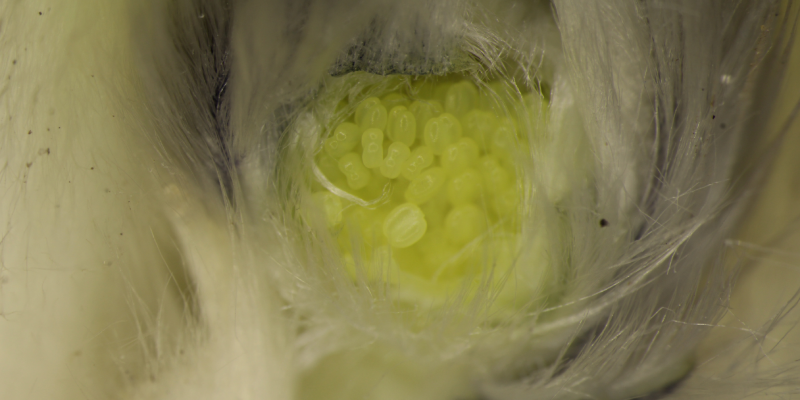
Biological role of endopolyploidy in flowering plants (2026-2028)
Endopolyploidy (EP) is a programmed process where cells multiply their genome without subsequent cell division. For many plant species, EP likely contributes to the development of their vegetative parts, yet...
Renáta Schnablová, Dinesh Thakur, Vendula Havlíčková, Petr Šmarda (Masaryk University in Brno)
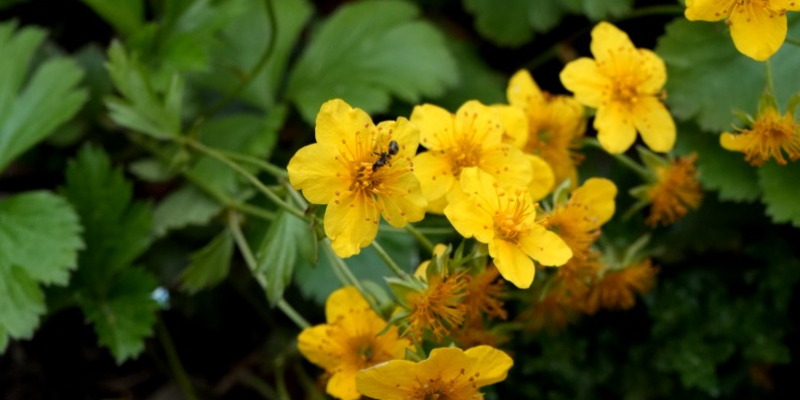
Effects of climate on flowers, trait coordination and plant-pollinator interactions
Flowers are complex and intricate structures that define angiosperms, a plant group that today accounts for nearly 90% of global land plant diversity. The remarkable diversification of angiosperms, driven largely...
read more...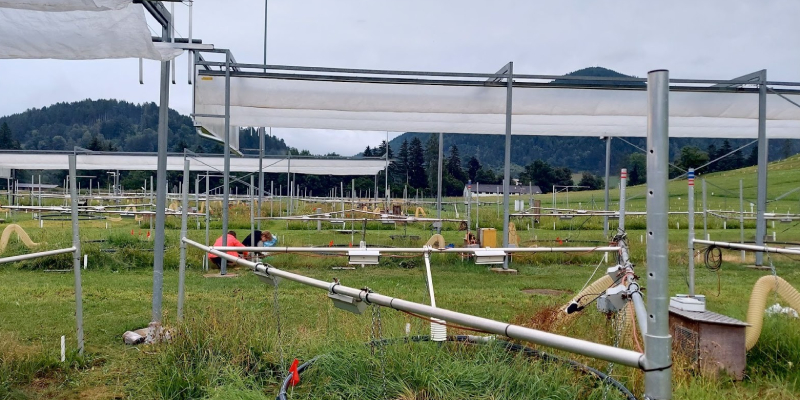
Plant metabolic changes under changing climate
This project investigates how changing temperature, water availability, and other climatic drivers reshape plant metabolism across natural climatic gradients, long-term field manipulation experiments, and controlled growth-chamber studies. We examine multiple...
read more...
The importance of plant-soil interactions for plant response to ongoing climate change
We aim to reveal whether plant-soil interactions affect plant responses to changing climate by studying interplay between climate, soil biota and plant adaptations in plant-soil feedback interactions. We use Festuca...
Zuzana Münzbergová, Dina in’t Zandt, Tomáš Dostálek, Vít Latzel, Věroslava Hadincová, Zuzana Kolaříková, Anna Aldorfová, Eliška Kuťáková, Mária Šurinová
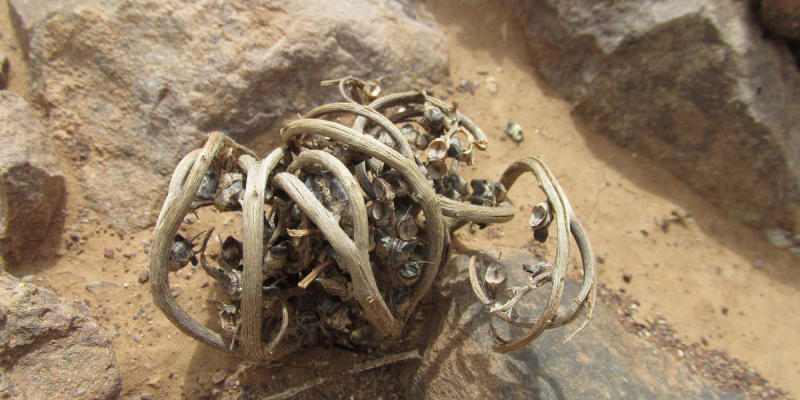
Long and short-term species response to aridification using the true Rose of Jericho as a model
Understanding consequences of aridification is fundamental to predict evolutionary responses of species to ongoing climate change. We aim to identify evolutionary patterns and processes in response to aridification in annual...
read more...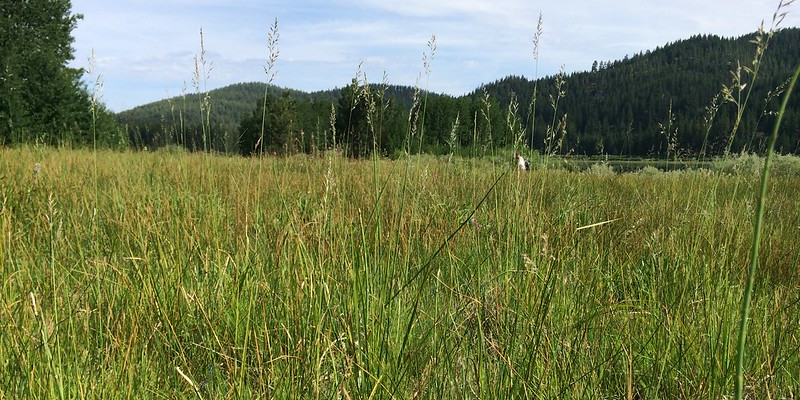
ClimBioMemo: Understanding cold acclimation as a key process affecting species survival under changing climate (2024-2025)
Climate change will alter cold acclimation, a key process enabling plant winter survival in cold regions. This can consequently have adverse effects on plant population persistence. In this project, we...
read more...
Functional differentiation in response to environmental variability in two shrub line species of high-altitude Himalaya (2021-2023)
Funded from the European Union’s Horizon 2020 research and innovation programme under the Marie Sklodowska-Curie actions The major aim of the proposal is to obtain novel insights into the ability...
read more...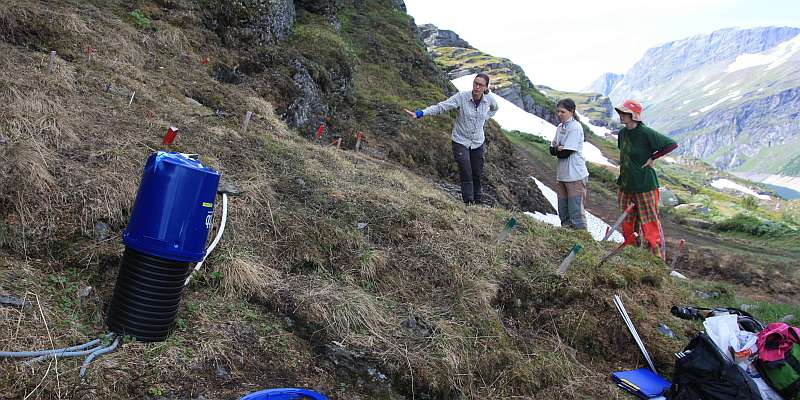
Can long-lived species experience rapid evolution in response to changing climate? (2019-2021)
Rapid evolution is potentially important mechanism of species ability to adapt to novel climates. We aim to identify signs of rapid evolution in response to novel climates in long-lived clonal...
read more...
The role of genetic and epigenetic changes and trait variation in adaptation of a clonal plant to changing climate
We aim to understand the ability of species to adapt to a changing climate using data on genetic and epigenetic patterns and range of morphological and physiological traits and susceptibility...
Zuzana Münzbergová, Věroslava Hadincová, Jana Knappová, Hana Skálová